Water is coming in. Or you can see daylight through the attic. Or you drove home after a storm and something is clearly wrong with the roofline. Whatever happened, the instinct is to panic-call five contractors and start getting quotes. That is the wrong move, and it usually costs homeowners more than it needs to.
The first hour after roof damage matters more than most people realize. What you do in that window determines how much interior damage compounds, whether your insurance claim holds up, and how smoothly the repair process goes. BTD Roofing & Outdoors provides emergencyroof repair service throughout the area. Here is the right sequence.
Stop the Bleeding First
If water is actively coming into the home, move anything that can be damaged. Furniture, electronics, documents. Put buckets down. If you have plastic sheeting, use it to cover what you cannot move. None of this is glamorous, but it is the fastest way to limit how much the interior damage compounds while you wait for a crew to arrive.
Do not get on the roof yourself. Debris, wet surfaces, and dislodged materials after a storm create fall risks that are not obvious from the ground. The damage is already done. Nothing you can do from up there in the next thirty minutes is worth the risk.
Document Everything Before Anything Gets Touched
Before anyone does anything to the roof, take photos and video of all visible damage. The exterior damage from multiple angles. The interior water entry points. Anything that has already been damaged inside. Do this before any tarp goes up, before any debris is cleared, and before a crew starts work.
Insurance adjusters work from documentation. Photos taken immediately after the event, before any mitigation, are the strongest possible evidence for what the storm actually caused. Homeowners who skip this step sometimes find themselves fighting for coverage on damage that was clearly storm-related but cannot be proven because the evidence was cleaned up before it was captured.
BTD Roofing helps homeowners document damage correctly and can be present during the adjuster visit to walk through the findings.
Emergency Tarping: What It Does and What It Does Not
A tarp stops active water entry. That is its only job. It is not a repair, and it is not a substitute for an actual assessment of what caused the damage. A properly installed tarp protects the interior while the full repair scope is being determined, but a poorly installed one shifts, pools water, and sometimes creates new entry points.
BTD Roofing's emergency response includes propertarping and protection as the first step, followed by a full assessment of the damage scope. The homeowner knows exactly what happened and what the repair involves before any permanent work is authorized.
What Not to Do in the First 24 Hours
Do not authorize permanent repair work from a contractor who shows up unsolicited after a storm. Storm chasers, meaning crews who appear door-to-door immediately after severe weather events, are a real problem throughout the Atlanta metro and Fulton County. A legitimate roofing company does not need to solicit business by knocking on doors the morning after a storm. The good ones have more calls than they can handle already.
Do not sign anything that assigns your insurance benefits to a contractor. Assignment of benefits agreements hand over your claim rights to the contractor, removing your ability to negotiate or dispute anything about the settlement. Read everything carefully before signing.
The Repair Process Once the Emergency Is Stabilized
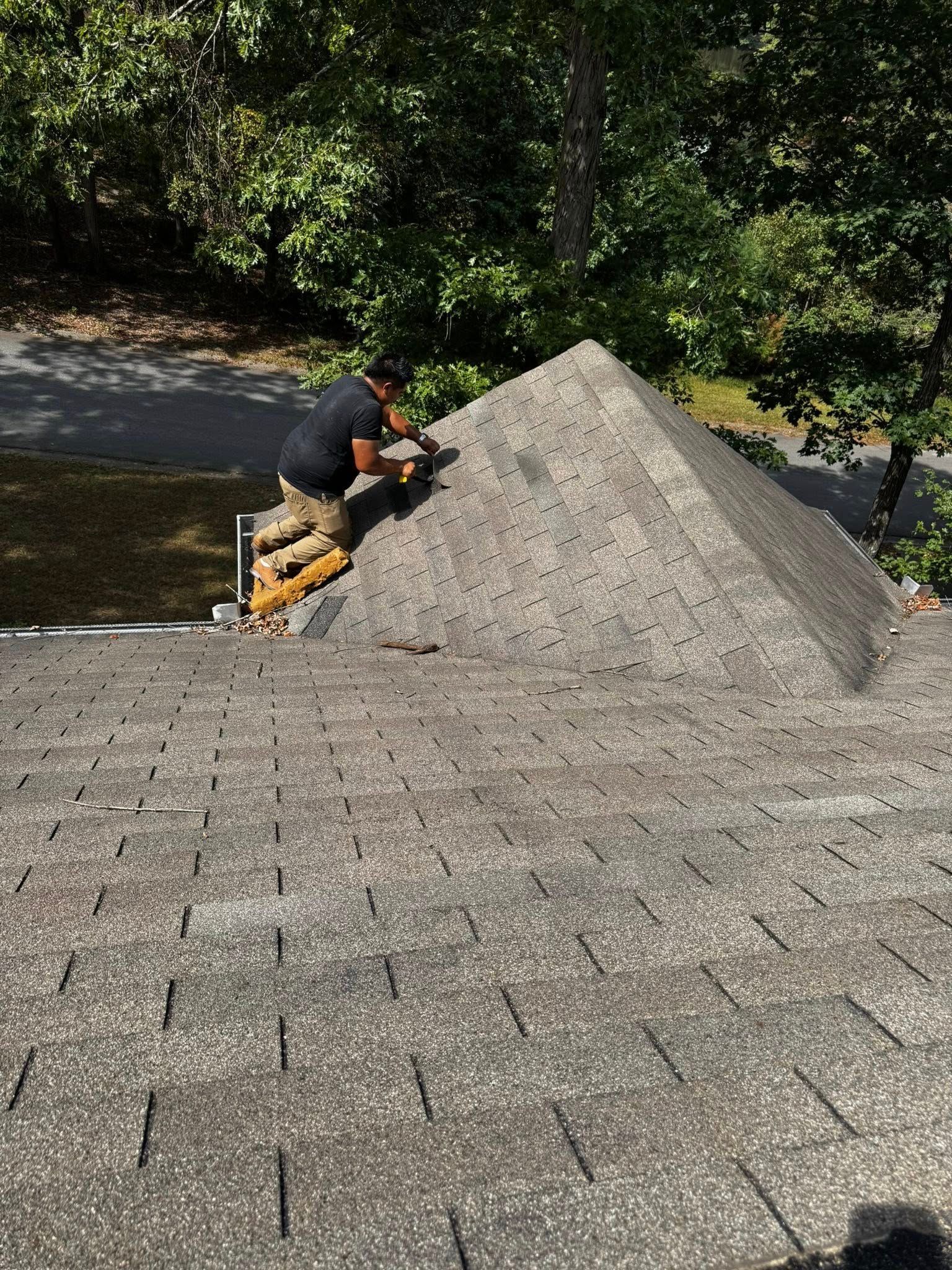
After the immediate situation is under control, the process moves to a full damage assessment. BTD Roofing inspects the full roof surface, not just the obviously damaged area, because storm damage is rarely as contained as it looks from the ground. Hail that damaged one slope likely hit the rest of the roof as well. Wind that lifted a section of shingles may have compromised the seal on adjacent sections.
Adam and the crew provide a written estimate before any permanent repair begins. The scope covers what is being repaired, what materials are used, and how the repair integrates with the surrounding roof. BTD's 10-year workmanship warranty covers the repair work. The Owens Corning manufacturer warranty applies to any new materials installed. Both are reviewed before the work starts.
BTD Roofing & Outdoors: East Point and Fulton County
Adam and Sarah Hambrick built BTD Roofing & Outdoors as a family business with a straightforward operating standard: show up when you say you will, do the work correctly, and leave the property cleaner than you found it. Reviews from homeowners across the service area consistently mention all three. BTD is an Owens Corning Preferred Contractor and BBB Accredited. The 10-year workmanship warranty and 50-year Owens Corning manufacturer warranty back every installation. Free estimates. Financing available for qualifying projects.
For emergency roof repair in East Point, call 678-347-0174 orcontact BTD Roofing online immediately.
Call Now for Emergency Roof Repair in East Point
If your roof is damaged and you need an immediate response in East Point and the surrounding Fulton County area, call 678-347-0174 now.Contact BTD Roofing & Outdoors online for non-emergency scheduling.
Frequently Asked Questions About Emergency Roof Repairs in East Point